Today, I read an insightful article from 南洋商报 (Nanyang Siang Pau) on the topic of the “generation gap”. For those interested, the full article can be read in Chinese at their official website.https://https://lnkd.in/g8mDCVk5
Summary of Key Points:
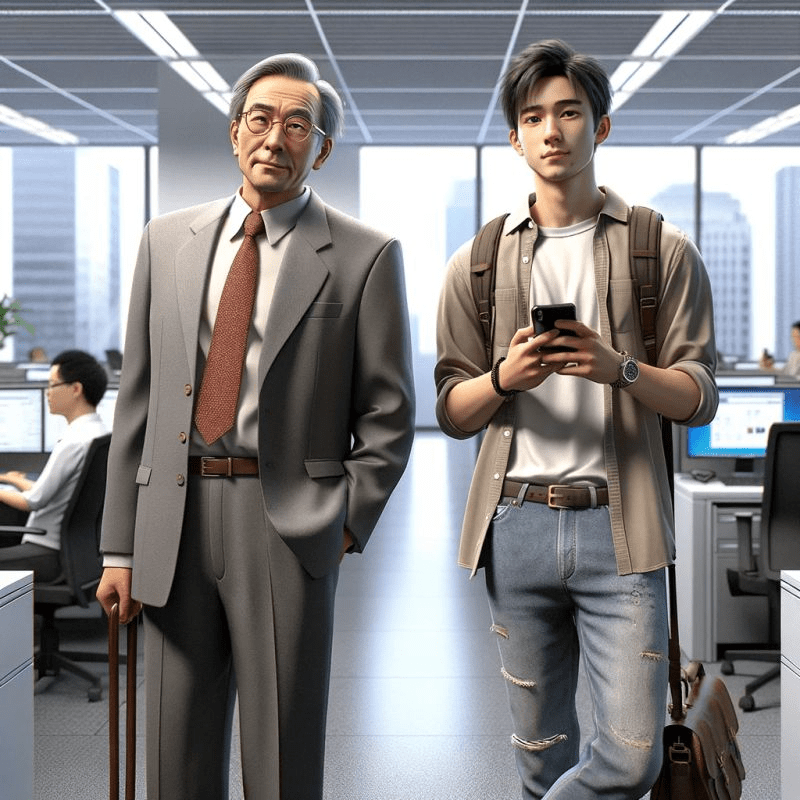
The saying “each generation is worse than the last” “一代不如一代” is often mentioned when talking about today’s young people.
However, is it so?
In the past, people had fewer resources and technologies, valuing hard work and education because opportunities were limited. Older generations tended to stick to one job for many years due to fewer opportunities and appreciation for what they had.
Nowadays, life is different.
People enjoy better living standards and access to education, allowing for more career and learning opportunities. The rise of technology has also made starting businesses and changing jobs frequently more common.
It’s not entirely fair to blame young people for seeming less sincere or diligent, as their upbringing and the environment have shaped them differently.
They’ve grown up more comfortably and haven’t faced as many hardships, which might affect their resilience and interpersonal skills.
Education has shifted focus too, from deep knowledge accumulation to more exam-oriented learning, influenced by society and parents’ expectations. This shift may affect young people’s overall attitude towards learning.
With lower birth rates and urbanization, community bonds are weaker, making today’s youth seem less connected.
However, this doesn’t mean they don’t value happiness; their experiences are just different. Comparing two generations isn’t simple because each faces unique challenges and opportunities, shaping their attitudes and values.
We should embrace change, as suggested by our hashtag#ktp culture, and understand that the generation gap highlights the evolving challenges and values across different eras.


 Koh Teck Peng Blog
Leave a comment