
Picture this :
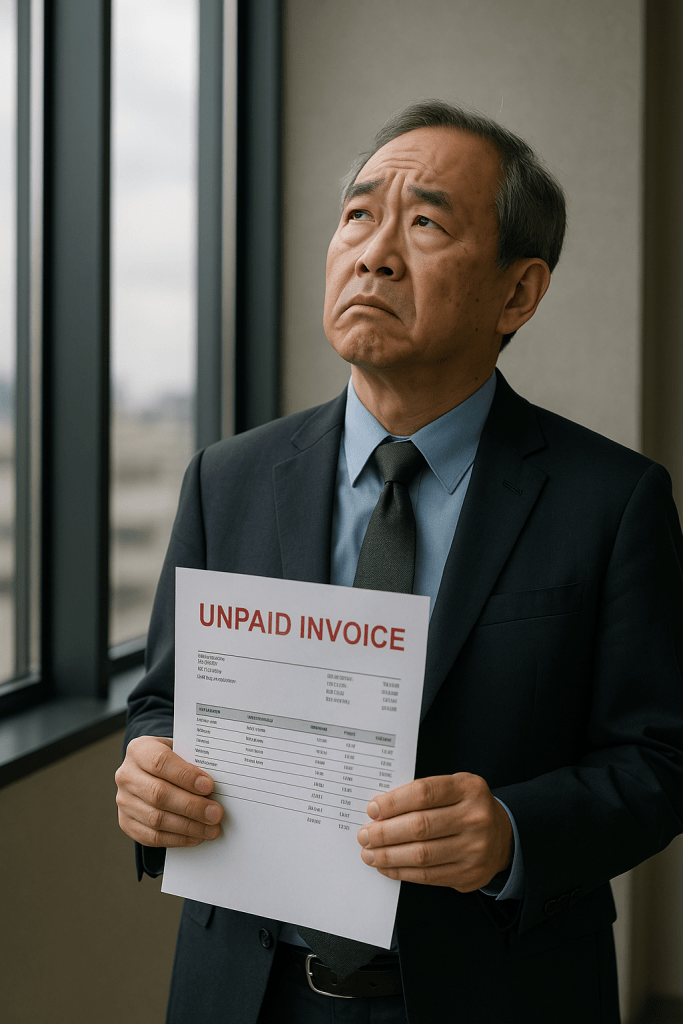
You deliver the audit, submit the tax return… and the client disappears when the invoice arrives.
Familiar?
Every accounting firm has faced this.
You can survive a bad market.
You cannot survive unpaid invoices.
As the principal of an audit and tax firm,
I’ve learned this lesson the hard way.
Cash flow is oxygen.
Without it, even the best firms suffocate.
So the question is : how do we chase debt without burning bridges or losing professionalism?
Here’s my playbook…
- Start with a gentle reminder
Most late payments are not intentional.
Clients are busy. Invoices get misplaced.
A polite phone call, WhatsApp, or email from your PIC works wonders.
Tone matters: be courteous, keep the relationship intact.
- Follow up with a formal reminder
If silence continues, step it up.
Send an official email with the invoice and statement of account attached.
Be clear about due dates.
This builds a paper trail which is useful if the matter escalates to court or MIA review.
I use three reminders also help justify tax deduction for bad debts.
- Stop the next compliance assignment
This is non-negotiable.
No audit, no tax return, no new engagement until the old bill is cleared.
Professional service is not charity.
- Resign if necessary
If payment still doesn’t come, resign as auditor or tax agent.
Professional clearance letters allow us to highlight outstanding fees to incoming auditors.
The sad truth? Not all auditors care to ask. Some take over without checking.
- Consider the Small Claims Tribunal
For smaller debts, this is a low-cost option.
I’ve not tested it myself, but it’s worth exploring.
Any practitioners here tried it before?
- Escalate with a lawyer’s letter or CTOS
Still no payment? Time to escalate.
A lawyer’s demand letter or a CTOS record sends a strong message.
Yes, it costs money and may hurt relationships.
But sometimes, it’s the only paperwork that works.
Debt collection is uncomfortable.
But it is necessary.
We owe it to our staff, our suppliers, and ourselves to protect cash flow.
Being professional does not mean being soft.
It means being firm, fair, and consistent.

 Koh Teck Peng Blog
Leave a comment