
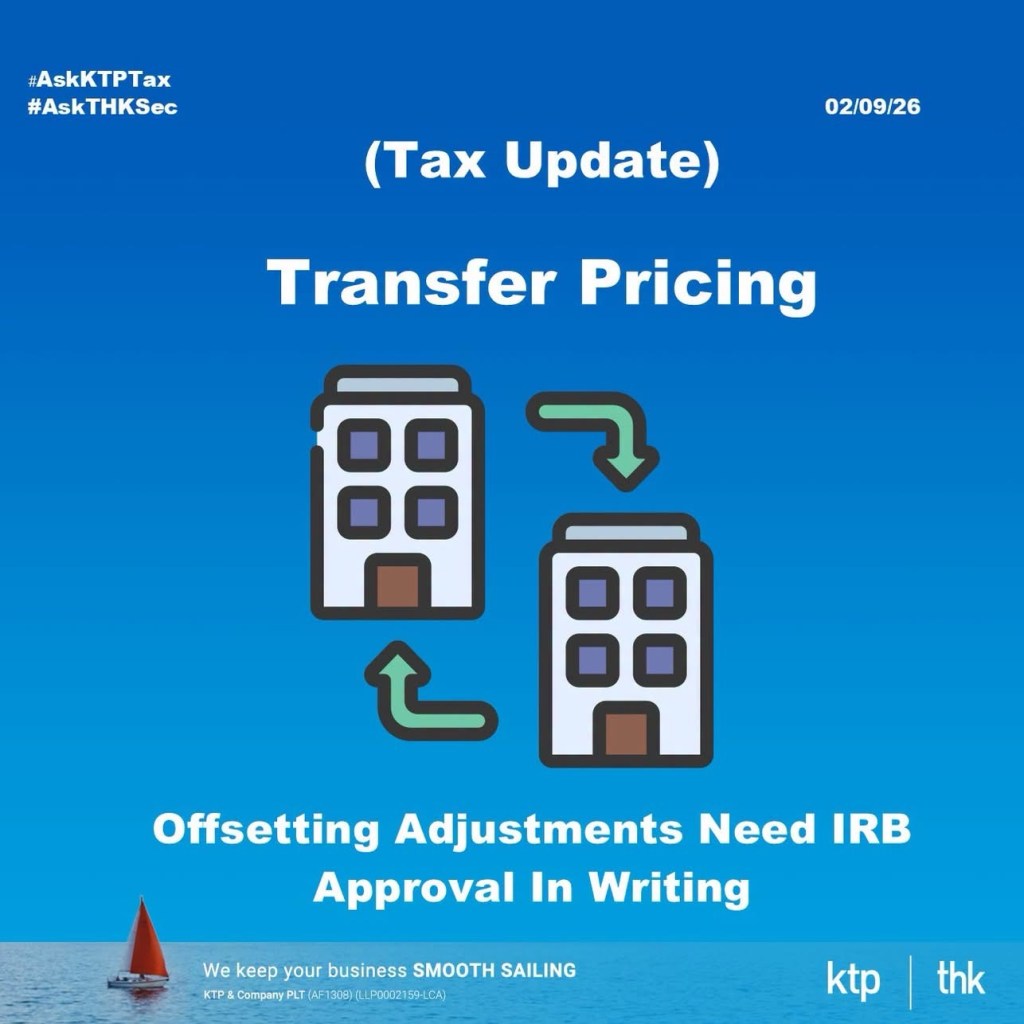
(Tax Update) LHDN Adjusts One Side. Taxpayer Must Apply, Explain and Wait for Relief on the Other Side.
“Boss, this is the same transaction.
How can LHDN adjust one side but not automatically correct the other side?”
Welcome to the agony of LHDN transfer pricing audit.
Company A charged its related Company B a management fee of RM200,000.
During a transfer pricing audit, LHDN decides the arm’s length fee should be RM500,000.
Company A immediately faces an additional RM300,000 taxable income.
The SME boss naturally asks:
“Then Company B can claim another RM300,000 deduction, correct?”
My answer:
“Can request.
But not automatic.”
Under the Income Tax (Transfer Pricing) (Amendment) Rules 2026, Company B may request an offsetting adjustment.
But Company B must make the request in writing.
And the adjustment remains subject to the Director General’s approval.
Same transaction.
Same group.
Same shareholder.
But two separate taxpayers.
Tax law sees two companies.
Everyone asks the same question:
“Why can’t LHDN adjust both sides together?”
When I explain this, the client looks at me as if I personally wrote the tax law.
The new Rule 13(1A), deemed effective from YA 2023, is welcomed.
But it provides a route to request relief.
It does not guarantee automatic relief.
Before agreeing to any transfer pricing adjustment, always ask :
“What happens to the other company?”
Do not assume that Company A’s objection, appeal or audit settlement will automatically protect Company B.
Review both tax files.
Quantify both sides.
And submit the offsetting adjustment request with proper supporting documents.
One related-party transaction can create problems for two taxpayers.
If you review only the company under audit, you may be seeing only half of the tax problem.
Read the full content in our blog
https://www.ktp.com.my/blog/tp-on-offsetting-adjustment/2sept2026




Leave a Reply