
Last year, one boss sat in front of us.
On the table, there was a real buyer.
Not those simply ask ask only type.
Real money.
Strategic buyer.
Terms also quite clean.
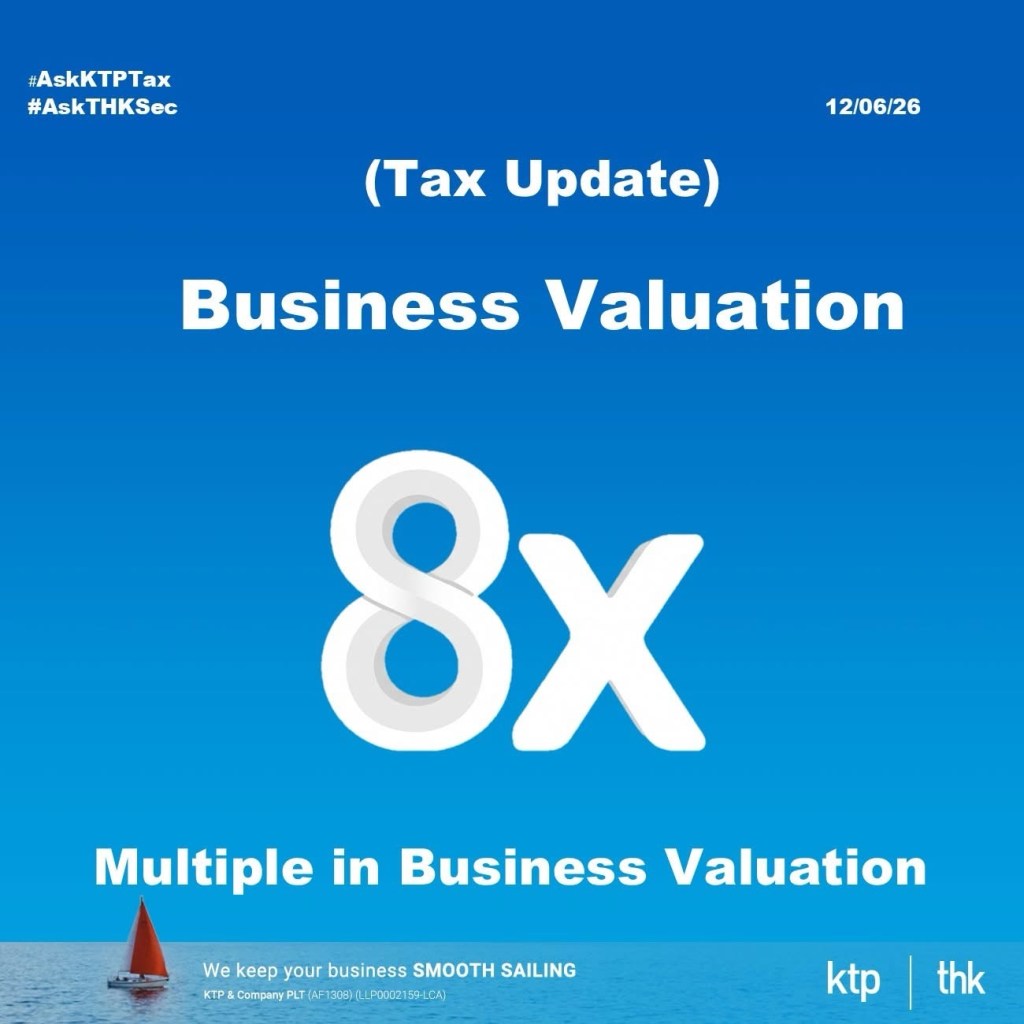
The buyer was willing to offer around 5 times PAT.
The boss looked at it and said very calmly:
“My industry is 8 times PAT. This offer only 5 times. Buyer is pressing my price.”
When I heard that, inside my heart, I was a bit worried.
The most expensive thing is the number inside the boss’ head that nobody has tested before.
Eighteen months later, the buyer went and acquired his competitor.
After that, when other people came to ask, the terms were already lower than the original offer.
The boss is still doing business today.
And he is still waiting for his 8 times.
The market has already moved on.
Many SME bosses are not purposely unrealistic.
They just worked too hard to build the company.
Ten years.
Twenty years.
Thirty years.
Customers, they chased themselves.
Bankers, they negotiated themselves.
Staff problems, they carried themselves.
Cash flow gap, they covered themselves.
So when a buyer gives one number, the boss will naturally think:
“My whole youth only worth like this?”
I understand that feeling.
But buyer is buying future cash flow.
Not the boss’ past hardship.
The question is, where did this 8 times come from?
Most of the time, the answers are quite similar.
Listed company in the same industry.
Some acquisition news headline.
Something heard during dinner.
Or another boss simply blow water.
Here is the problem.
Listed companies have liquidity.
Their shares can be sold tomorrow.
Your Sdn Bhd shares cannot be sold like that.
Listed companies have scale.
Customers are more diversified.
Management team is more complete.
Governance is more mature.
Accounts are more transparent.
Many SMEs are different.
Customers are inside the boss’ handphone.
Pricing depends on the boss.
Bank facility depends on the boss’ face.
When staff have problems, they still look for the boss.
This kind of company got no value?
Got.
But the buyer will ask one very realistic question:
“Am I buying the company, or am I buying this boss?”
If the business depends too much on one person, the valuation will definitely be discounted.
Not because the buyer is bad.
It is because the risk is really high.
Let us use Ringgit to calculate. More painful.
Assume the company earns RM2 million PAT a year.
The boss heard that the industry is 8 times.
So in his mind, the company is worth:
RM2 million x 8 = RM16 million.
Sounds very beautiful.
But once the buyer’s adviser looks at it, the adjustment starts.
Company too small, discount a bit.
Private company shares hard to sell, discount again.
Customers too concentrated, discount again.
Boss’ personal relationship too important, discount again.
In the end, it may only be 4 times to 5 times.
That means around RM8 million to RM10 million.
If key-person risk is too high, part of the price may even become earn-out.
Meaning, after selling the company, the boss still has to stay back for a few years and hit certain targets before he can receive the money.
At this point, the boss will feel very unhappy.
“Why my RM16 million become like this?”
The answer is simple.
Because RM16 million is the number inside the boss’ head.
RM8 million to RM10 million may be the number the market is willing to pay.
So next time someone tells you:
“Your company is worth 8 times.”
Do not get happy too fast.
Ask him three questions first.
8 times of what?
PAT or EBITDA?
Compared with who?
Listed company, news headline, or real private company transaction?
What adjustment has been made?
Size, illiquidity, key-person dependence?
If he cannot answer, that is not valuation.
That is only a wish.
But this is also not bad news.
Because many discounts can actually be fixed early.
If you want to sell your company three years later, do not only start preparing three years later.
Start now.
Move customer relationships from the boss’ handphone into the company system.
Build the second layer of management.
Reduce the risk of one customer contributing too much revenue.
Clean up the accounts.
Do not put private expenses into the company account.
Make sure the management account is reliable.
All these things are boring.
But on exit day, they are worth real money.
The most dangerous number in selling a company is the number inside the boss’ head.
I have seen good offers die because of one borrowed multiple.
I have also seen bosses prepare their company a few years earlier and reduce the discounts one by one.
In the end, they did not get better terms by shouting a higher price.
They got better terms because they were prepared.
Multiple is only a reference.
Valuation is real work.
The best exit is not negotiated in the last month.
It is prepared a few years earlier.
If selling your company, raising funds, or succession planning is already in your next three-year plan, start asking this question now:
“What discount in my company can I fix before the buyer uses it to cut my price?”
Read the full story in our blog
https://www.ktp.com.my/chineseblog/multiple-in-business-valuation/12june2026



Leave a Reply